


 83 / 114

83
BRAKE DRUM AND ROTOR SERVICE INFORMATION
SERVICE INFORMATION
The minimum thickness cast into a rotor is the thickness at which the rotor should be discarded and is
no longer suitable for service. If any portion of the rotor is thinner than the minimum thickness it must be
discarded. The minimum thickness cast into the rotor supersedes all published information.
BRAKE DRUM REBORE LIMITS AND/OR MAXIMUM WEAR DIAMETER
ROTOR TURNING LIMITS AND/OR MINIMUM WEAR THICKNESS
This information is furnished to advise the importance of the rebore limits and/or maximum wear diameter
as shown on our Webb brake drums and turning limits and/or minimum wear thickness on our Webb rotors.
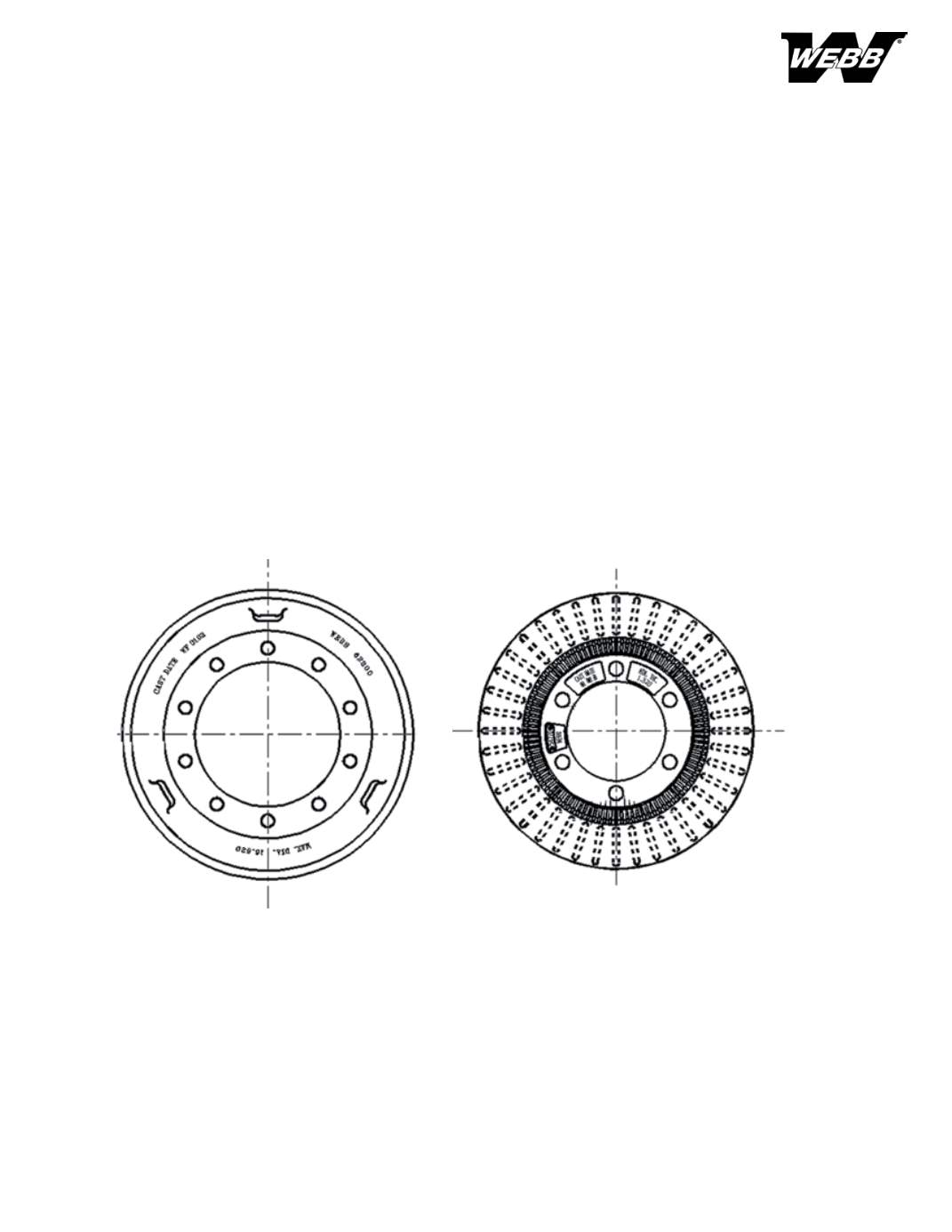
This dimension is cast or stamped on our brake drums as indicated on the drawing shown below. The
dimension is the maximum safe diameter or thickness to which a drum or rotor may be turned, ground and/or
worn. The marking of this dimension on brake drums and rotors is in accordance with Massachusetts Law #
904 Acts of 1968.
CAUTION: To insure product safety, it is critical that any brake drum or rotor reaching this
dimension by turning, grinding and/or wearing be considered unsafe and immediately replaced. Any
brake drum exceeding this dimension is considered a safety hazard and is not subject to warranty
consideration.
ADDITIONAL INFORMATION
The dimension shown on our brake drums and rotors is the current maximum diameter or minimum thickness
and supersedes any previously published information.
A3. Anti-Skid Holes
Due to the low usage of the anti-skid holes in brake drums, we will no longer drill holes in brake drums for
anti-skid mounting as standard. When ordering drums from Webb for anti-skid mounting, use special drilling
option code “A”. The anti-skid holes will be furnished tapped 5/16”-18 and will use conventional cap screws.