



 7 / 107

6
U.S. 888-725-9355
Canada 800-387-3889
COMMON PROBLEMS WITH BRAKE DRUMS
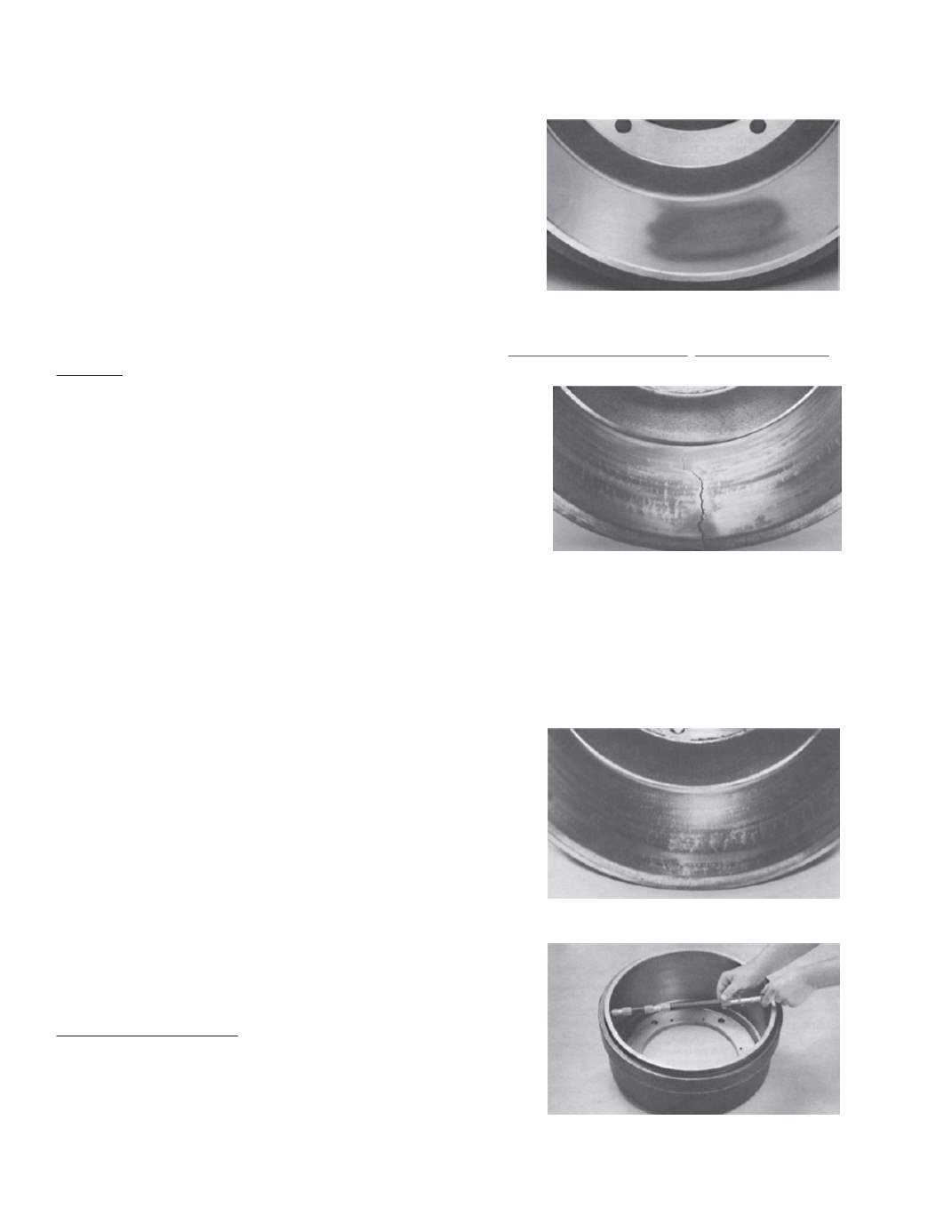
Grease Stained Drums
Brake drums with discolored spots on the braking surface, and oil or grease
splattered on the brake assembly indicates over-lubrication of the cam or camshaft,
or by an oil seal failure. Correct this problem. By repairing the source of the oil or
grease leak, clean the drum and replace soaked linings.
Cracked Drums
A drum which has cracked completely through a section of the braking surface
must be replaced immediately
.
A cracked drum is not
repairable!
Cracked drums are caused by one or more of the following:
1. Excessive heating and cooling
2. Excessive shoe pressure
Repeated cracking of this type may indicate one or more of the following:
1. Dragging brakes
2. Inadequately designed drums for the application
3. Inadequately designed braking system for the application
4. Incorrect brake balance of the vehicle
5. Driver abuse
The total braking system of the vehicle should be checked thoroughly,
paying attention to the following:
1. Proper friction ratings
2. Proper valving and pluming
3. Proper brake balance
4. Missing linings and/or brake system components.
Heat Checking
A broken network of fine hairline cracks on the braking surface of the drum, is a
normal phenomenon of braking surfaces. It is caused by regular heating and cooling
of the surface. Heat checking does not impair brake performance; but you should
examine heat checks frequently to make sure they have not grown deep enough to
weaken the drum.
Oversized Drums
If the brake surface diameter is in excess of it’s specified maximum diameter,
replace the drum immediately.
It may be necessary to replace drums in pairs to
assure proper brake drum balance and braking efficiency. If the linings show
irregular wear replace them.