



 9 / 107

8
U.S. 888-725-9355
Canada 800-387-3889
COMMON PROBLEMS WITH BRAKE DRUMS (continued)
B
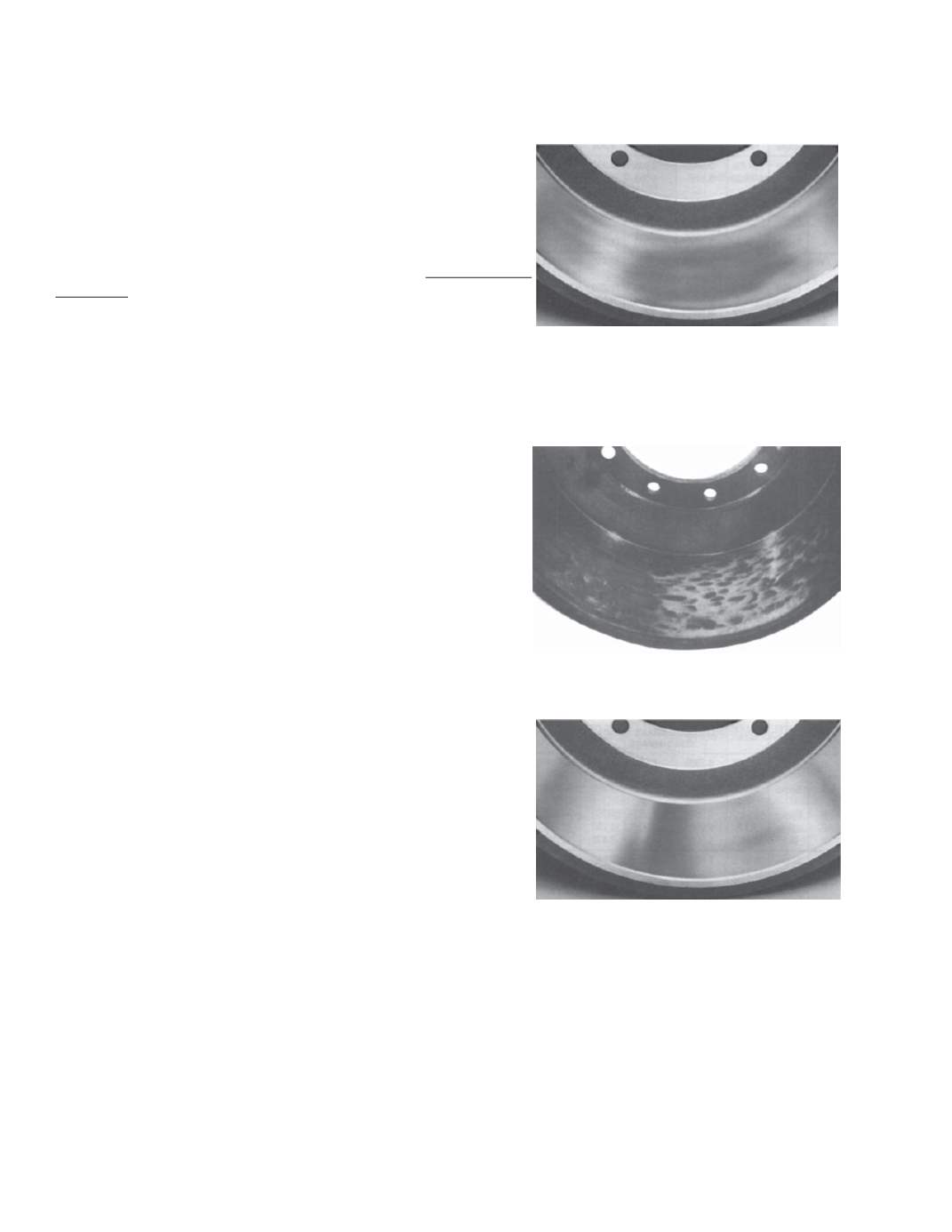
lue Drums
A bluish disfiguration on the brake parts (shoes, drums/rotors or bolts) indicates
excessive heat.
This is usually caused by an oversized brake surface diameter/undersized rotor
width or by weak or broken return springs.
For drums, check the braking surface diameter. If it is oversized,
replace the drum
immediately
. If the return springs are weak or broken, replace them.
Martensite Spotted Drums
Martensite spotted drums have extremely hard, slightly raised, dark colored spots on the braking surface, shown uneven wear and the
surface is out-of-round. This condition may cause excessive noise or shudder during brake applications. Unless this is detected very
early, the brake drum should be scrapped.
The spots are caused by very light brake applications with non-asbestos organic
linings that are contacting the drum at a few lining high spots. To avoid this
problem, change braking technique to snubs rather than light dragging stops or
ensure the lining fits the drum contour uniformly when it is new.
Attempts to rebore a drum to remove the spots will usually aggravate an already
bad situation, and if the drum is allowed to stay in service, cracks will connect
between the martensite spots leading to brake drum failure. If the brake lining and
drum are replaced and the same brake application techniques are used, the results
will likely be the same. If only the drum is replaced, it may not develop these spots
(as the high points are worn down).
Polished Drums
A polished brake drum/rotor is characterized by a mirror-like finish on its braking
surface. Correct this problem by removing the gloss with 80 grit emery cloth. If the
problem recurs, check the linings to make sure they are the proper friction rating.
If the linings are glazed, consult the vehicle manufacturer for the proper lining
material.