


 86 / 105

85
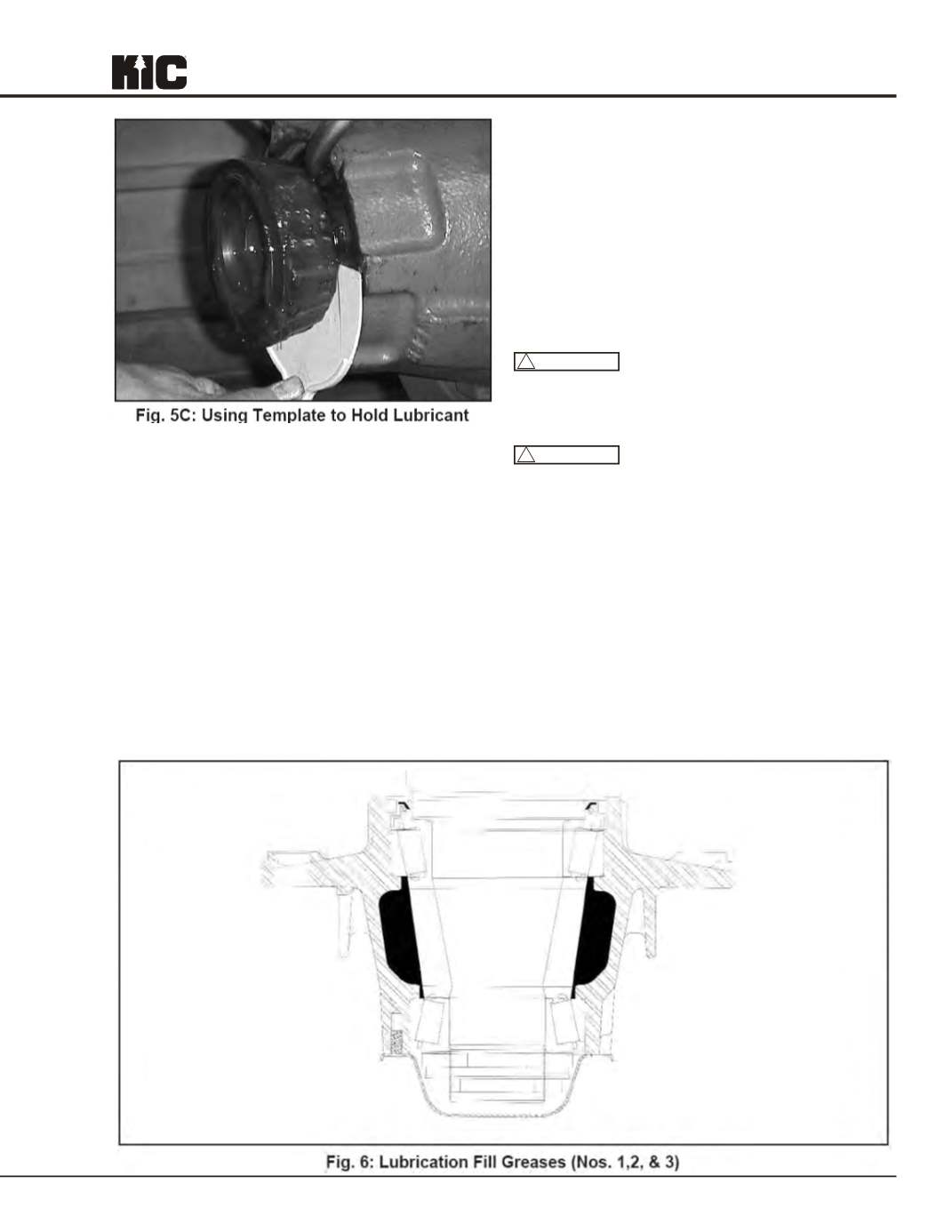
Hubcap Considerations: Hard Grease
Use an appropriate tamper-proof, hubcap. These hub-
caps prevent gear oils from being accidentally being
added to grease-filled wheel ends. Follow the recom-
mendation of the seal supplier to determine if the hub-
cap should be vented or non-vented.
NOTE:
If a metal hub cap is used, it is necessary to coat
the interior surfaces with a film of grease. Use special
care not to cover the vent with grease.
DRIVEN AXLE LUBRICANT WHEEL END
CONSIDERATIONS
NOTE:
In this Recommended Practice, all driven
axles are oil lubricated.
Inspection and Preparation
If the wheel end is disassembled, clean and inspect
the wheel end components including all bearings, axle
shafts, hub and bearing cups, axle, and fasteners, re-
moving all contaminants and lubricant residue. Replace
seal, axle flange gasket, and all questionable parts. For
detail procedures, refer to TMC RP 622.
Component Lubrication
Pre-lubricate the inner and outer wheel bearing cones
with clean lubricant of the same type used in the axle
reservoir.
! CAUTION
: Failure to lubricate bearing correctly
and maintain proper lubrication may result in bearing
damage. For additional information refer to TMC RP
618 and RP 622.
! CAUTION
: In oil bath systems, do not pack bear-
ings with grease before installation. Grease will tempo-
rarily restrict or prevent the proper circulation of lubricant
and may contribute to wheel seal failure.
Hub Fill Procedures: Oil
Install the wheel seals, as documented in RP 622. Fill
hub cavity with oil. Use lifting equipment to align the hub
assembly with the spindle taking care to not damage the
seal and spindle threads. Push the hub assembly into
position.
While the hub is supported, fill the hub cavity with clean
oil and push into position or push into position and then
fill the hub cavity.
Recommendations for Wheel End Lubrication
TMC RP 631 © 2003 – TMC/ATA – Reprinted with Permission